Introduction
Pelvic organ prolapse (POP) is very common, seen in an estimated 43% to 76% of women, in both younger and older populations. In younger women, it's often related to childbirth, particularly pelvic floor muscle trauma that can occur after a prolonged, difficult labor or delivering a larger baby (more than 9 to 10 lbs). In older women, it often develops as supportive ligaments stretch out over time.
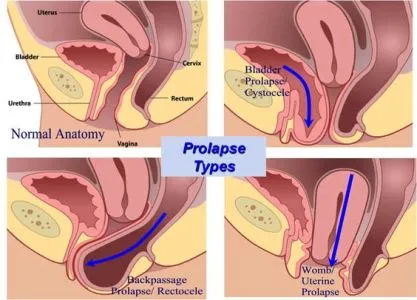
POP, or simply prolapse, is the downward descent of the female pelvic organs: the vagina, uterus, bladder, and rectum.
Prolapse Terminology
- Cystocele or urethrocele: bladder prolapse.
- Rectocele or enterocele: rectum prolapse. Rectal prolapse is not the same as hemorrhoids.
- Uterine prolapse: prolapse of the vaginal vault.
- Urodynamics: a bladder function test that evaluates urinary incontinence or difficulty urinating.
- Cystoscopy: a procedure using a camera to assess for anatomical abnormalities contributing to urinary symptoms.
- Defecography: a radiological study that looks at bowel function and prolapse symptoms.
Risk Factors for Developing Prolapse
- Loss of uterine and bladder support, with connective tissue that's lax or weak. Some women are genetically predisposed to lax tissue.
- Chronic constipation
- Systemic disease, such as Ehlers-Danlos syndrome
- Chronic coughing
- Obesity
- Menopause
- Heavy lifting and repetitive, intense activities such as CrossFit
- Smoking
Degrees of Prolapse
POP is generally described in three degrees: mild, moderate, and severe. The degree is graded by how far the organ has descended in relation to the hymen.
Mild POP: Most women are asymptomatic, with no complaints until the organ, whether uterus, bladder, or rectum, has prolapsed past the hymen. In mild POP, loss of support can result in urethral hypermobility and cystocele (bladder prolapse), which is thought to cause stress urinary incontinence. Bladder prolapse and stress incontinence often coexist, especially with mild prolapse.
Moderate and severe POP: Symptoms include a vaginal bulge that can be seen and felt, caused by the uterus, bladder, or rectum. Urinary urgency, frequency, and incontinence are common coexisting complaints, along with pelvic floor dysfunction and sometimes constipation. The anterior vaginal wall supports the bladder and urethra.
- With more severe prolapse, women may notice urinary hesitancy, an intermittent or weak stream, or difficulty fully emptying the bladder, sometimes needing to manually splint the prolapse to urinate or change position on the toilet to help.
- Symptoms of moderate and severe prolapse are usually worse at the end of the day, with standing, or with exercise, and improve when lying down.
- Prolapse symptoms primarily affect quality of life. They're not medically dangerous, but they tend to gradually get worse over time, and prolapse generally doesn't heal on its own.
- Symptoms are usually better in positions where gravity is eliminated, and more noticeable with straining.
Treatment for Prolapse
Conservative treatment options include:
- "Wait and watch," depending on the degree of prolapse
- A pessary
- Physical therapy
Surgical repair of prolapse is performed by a urogynecologist.
What to Expect When Seen by a Urogynecologist
- The doctor will examine your symptoms and evaluate the degree of organ prolapse using the prolapse grading system.
- A vaginal exam is performed, and you may be asked to strain to show the maximum extent of the prolapse. Various instruments may be used.
- Depending on the degree of prolapse and whether weakness is found in the pelvic floor muscles, you may be referred to a pelvic floor therapist, a physical therapist with additional specialized training and board certification in treating pelvic conditions.
- When appropriate, you may be fitted with a pessary.
About Pessaries
- A pessary is an intravaginal device used to support the vaginal wall in women with POP.
- Pessaries are generally prescribed by a urogynecologist and come in various shapes and sizes, mostly made of silicone.
- A pessary is used as a safe alternative to surgery when appropriate.
- There isn't high-level research evidence confirming the effectiveness of pessaries for managing POP, but clinical trials have shown they can meaningfully improve pelvic floor symptoms, quality of life, satisfaction, and sexual function.
- Women fitted with a pessary are advised to remove and reinsert it periodically to avoid complications such as vaginal bleeding, erosion, or infection. Regular follow-up with your doctor is recommended.
Physical Therapy and Prolapse
Women can't change their genetic predisposition, but they can do what is in their control, which is exercise. Pelvic floor muscle strengthening exercises, including Kegels, have been shown to help prevent and even improve symptoms of urinary urgency and frequency. Regular pelvic floor strengthening helps to strengthen and retrain the muscles and nerves of the pelvis.
If you suspect you have prolapse, or have any questions, please reach out. I'm happy to answer your questions or point you in the right direction.
Conclusion
Vaginal prolapse is common, and it's treatable. Whether through conservative management, a pessary, or physical therapy, there are real options for relief. If you suspect you have prolapse, pelvic physical therapy can help you understand your options and find the right path forward.
Learn more about our approach to pelvic organ prolapse and pelvic floor therapy, or request an appointment to talk with Dr. Kavitha directly.