Sexual Dysfunction in Bensalem
If intimacy has become something you brace for instead of look forward to, you are not alone and you are not broken. Pain, lost sensation, or tightness in this area is common, it is treatable, and you deserve care that treats it with warmth and complete privacy.
What causes sexual dysfunction?
Pain, discomfort, or a loss of connection during intimacy is rarely "just in your head," and it is rarely something you have to accept as permanent. In women and men alike, the pelvic floor muscles, the nerves running through them, and the tissue they support all play a direct role in comfort, sensation, and function. When those muscles are too tight, too weak, poorly coordinated, or guarding against old pain, intimacy suffers. Understanding what is actually happening in your body is the first step toward getting it back.

When the pelvic floor muscles become chronically tight or go into spasm, they can make intimacy painful rather than comfortable. This tightness often develops gradually, as a protective response to an old injury, a stressful season of life, or pain that was never fully addressed. The muscles keep guarding long after the original cause is gone, and that guarding itself becomes the problem.
Sexual function depends on the pelvic floor's ability to contract, relax, and coordinate on cue, not just on strength alone. Weakness or a lack of control here can reduce sensation, make arousal harder to reach, and chip away at confidence in the moment. This is common after childbirth, after surgery, or simply after years of never being taught how these muscles work.
Childbirth, pelvic surgery, and hormonal shifts like perimenopause and menopause can all change the tissue in and around the pelvic floor. Scar tissue can restrict movement and create pulling or pain during intimacy, and thinner, less elastic tissue after menopause can make friction and discomfort far more likely. These changes are physical, they are real, and they respond well to targeted care.
Pain has a way of teaching the nervous system to expect pain, even after the original cause has healed. Nerves in the pelvic region can become sensitized, firing off discomfort signals earlier and more intensely than they should. The muscles respond by tightening further to protect the area, which only feeds the cycle. Calming this pattern down is often the missing piece.
Pelvic floor dysfunction is not a women's issue alone. Men can experience pain, reduced sensation, or performance changes tied directly to pelvic floor tightness, weakness, or nerve irritation, often following prostate issues, surgery, or chronic pelvic tension. The mechanism is the same, and so is the solution: a pelvic floor that works the way it is supposed to.

How physical therapy in Bensalem helps.
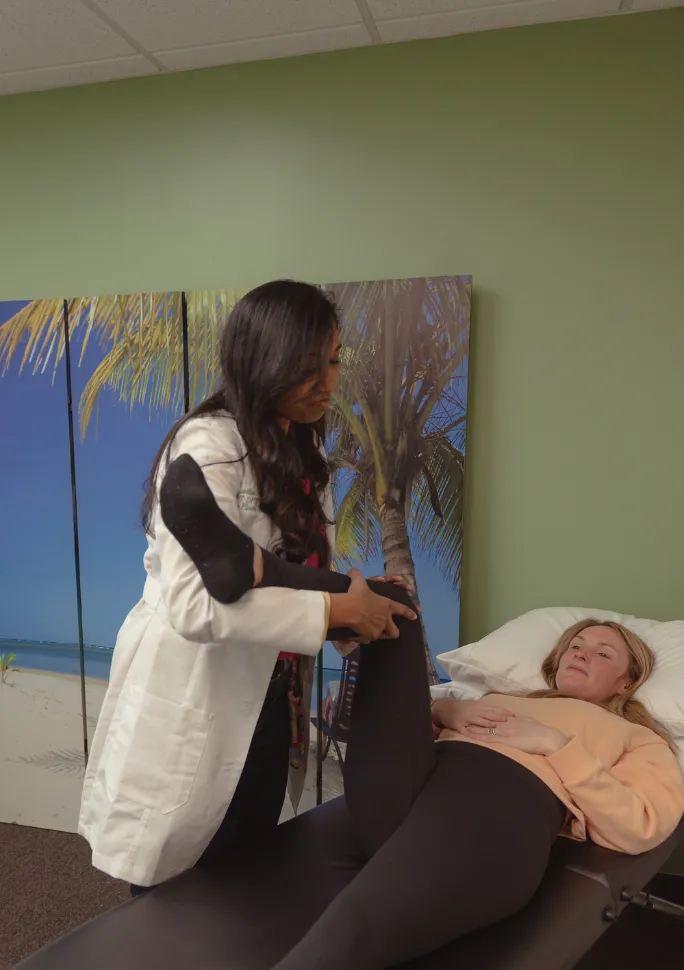
Every evaluation here is private, unhurried, and led by Dr. Kavitha personally, never handed off to a rotating team. We start by understanding your pelvic floor's specific pattern: where it is tight, where it is weak, where coordination has broken down, and where old pain has left the nervous system on high alert. From there we use gentle hands-on release to calm overactive tissue, breathing and relaxation techniques to interrupt the guarding cycle, and progressive strengthening to rebuild the control and sensation intimacy depends on. Nothing is rushed, nothing is assumed, and nothing about your care requires you to explain more than you are comfortable sharing. Whether you are a woman navigating postpartum changes or perimenopause, or a man recovering from surgery or years of pelvic tension, the goal is the same: a pelvic floor that supports comfort and confidence instead of standing in the way of it.
What to expect from your recovery.
Assessment
We start with a thorough, private conversation about your history, your goals, and your comfort level, followed by an evaluation of your pelvic floor's tone, strength, and coordination. Nothing happens without your consent and a clear explanation first. You leave with a real understanding of what is driving your symptoms.
Release and calming the nervous system
We use gentle manual therapy to release tight or overactive pelvic floor muscles and reduce the guarding pattern that keeps causing pain. We layer in breathing and relaxation techniques that calm the nervous system down. Discomfort during intimacy begins to ease as the tissue and the nerves around it stop bracing.
Strengthening and confidence
As pain eases, we rebuild strength, coordination, and sensation with a progressive home and in-clinic program tailored to you. We track your progress together and adjust as you go. The goal is intimacy that feels like yours again: comfortable, connected, and free of fear.
I cannot say enough good things about Dr. Kavitha. She was very patient as well as thorough. I would definitely recommend her to my family and friends.
Intimacy rarely stands alone.


Pelvic Health
The umbrella page for pelvic floor care: what pelvic health means and why treating it changes far more than one symptom.
Perimenopause
Hormonal changes affect the pelvic floor and intimacy too. Targeted care keeps you comfortable and confident through the transition.

Endometriosis
Endometriosis often brings pelvic floor tension and pain with intimacy along with it. Pelvic floor therapy can ease both.