Perimenopause Pelvic Care in Bensalem
Vaginal dryness, new leaks, and unfamiliar pelvic aches are not something you just have to live with. Perimenopause changes your pelvic floor, and the right therapy helps you feel steady, comfortable, and in control again.
What happens to your pelvic floor during perimenopause?
Perimenopause is not something you have to push through quietly. As estrogen levels shift, so do the tissues and muscles of your pelvic floor, sometimes gradually and sometimes seemingly overnight. Vaginal dryness, new bladder leaks, and pelvic aches that were not there before are common, and they are treatable. You are not imagining it and you are not stuck with it.

Estrogen keeps the tissues of your vagina, bladder, and pelvic floor supple and well supported. As estrogen production becomes irregular during perimenopause, those tissues can thin and lose elasticity. This is a normal hormonal shift, not a sign that something is wrong with you, and it responds well to targeted therapy.
Lower estrogen reduces natural lubrication and can leave vaginal tissue feeling dry, tight, or irritated. This can make intimacy, exercise, or even sitting for long periods uncomfortable. Pelvic floor therapy addresses the muscle tension and circulation issues that often make dryness feel worse than it needs to.
Many women notice bladder changes for the first time during perimenopause: sudden urgency, leaking with a cough or a laugh, or more trips to the bathroom at night. These changes come from shifts in pelvic floor support and bladder tissue, and they are retrainable with the right exercises and habits.
As pelvic floor support weakens, some women feel heaviness or pressure, especially by the end of the day. Catching this early with targeted strengthening can ease symptoms and often keeps them from progressing further.
Disrupted sleep and hormonal fluctuations raise overall body tension, and the pelvic floor is not exempt. Many women unknowingly hold tension in their pelvic muscles during this transition, which can contribute to pain and urgency. Learning to release that tension is part of the work.
Shifts in muscle mass and body composition during perimenopause can change how you stand and move, which puts new stress on your low back and pelvic floor together. Rebuilding core and pelvic floor coordination keeps the whole system working the way it should.
How physical therapy in Bensalem helps.
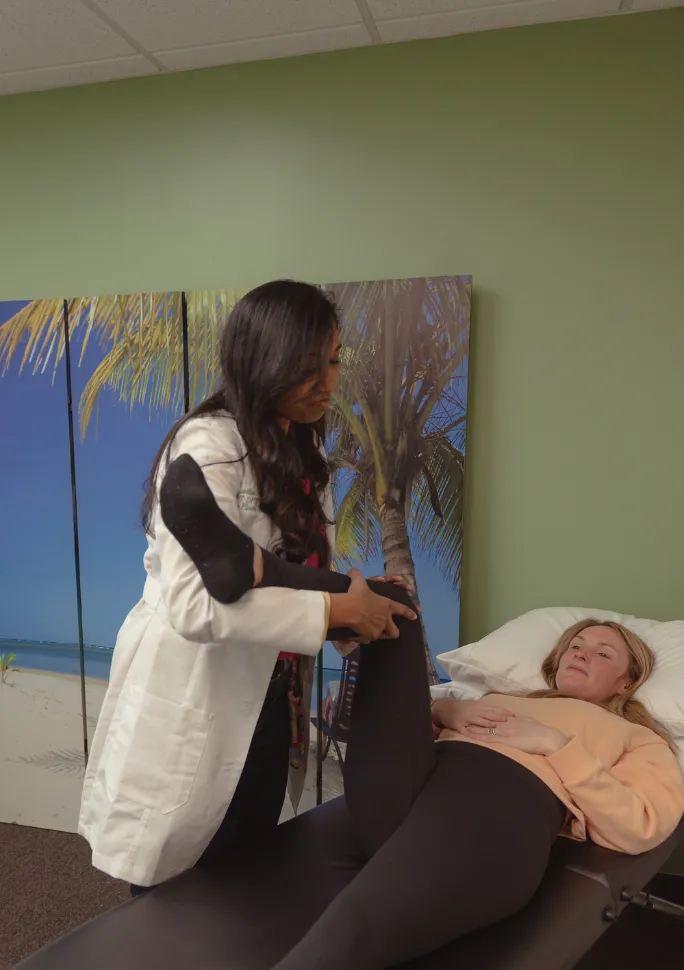
Perimenopause pelvic floor therapy starts with a real conversation and a thorough evaluation, not a pamphlet and a generic exercise sheet. We look at how your pelvic floor is coordinating, how your bladder is behaving, and where you may be holding tension without even noticing. From there we build a plan specific to you: targeted strengthening for leaking or heaviness, manual therapy to ease tightness and improve circulation to dry or irritated tissue, and breathing work that calms an overactive nervous system. As your symptoms shift through this transition, so does your plan. Many women assume this is just what aging feels like. It is not. Your pelvic floor can be trained and supported through perimenopause the same way it can at any other stage of life, and you deserve a plan built specifically around what your body is doing right now.
What to expect from your recovery.
Evaluation and hands-on assessment
We start with a thorough conversation about your symptoms, your history, and your goals, followed by a hands-on evaluation of your pelvic floor's strength, coordination, and tension. This tells us exactly what is driving your dryness, leaking, or discomfort.
A hands-on, personalized treatment plan
Using manual therapy, targeted exercises, and education, we address the specific issues we found, whether that is tight tissue, weak support, or a bladder that has become overactive. Every session is one-on-one with Dr. Kavitha.
Progressive strengthening and lasting confidence
As symptoms ease, we build long-term strength and coordination so you stay comfortable and in control well beyond your time in the clinic. You leave with a body you understand and tools you can keep using.
I thought I had to live the rest of my life in pain until I found Dr. Kavitha. She is a highly skilled PT with compassion and purpose to help alleviate pain.
Pain rarely travels alone.


Incontinence
Bladder leaks often show up or worsen during perimenopause. We treat the muscle and coordination changes behind it, not just the symptom.

Pelvic Health
Perimenopause affects your whole pelvic system. Understanding how it all connects is the first step toward feeling like yourself again.
Sexual Dysfunction
Vaginal dryness and pelvic floor tension can make intimacy uncomfortable. We treat the physical causes with dignity and care.